Sending the gift of better eyesight to the
Third World
by Kate Smithson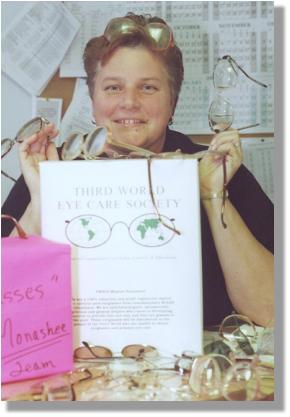
The gift of eyesight
Ninety-three people in faraway places will be able to see better, thanks to a Nelson
Forest Region campaign to donate used eyeglasses to the Third World Eye Care Society.
A third of these faraway people will have improved vision because of just one person,
Jo Petit, a Nelson Region employee who contributed 33 pairs of glasses.
"You just put the word out, ask people to ask their friends, it wasn’t too
difficult," Jo said.
According to the World Health Organization, 90 per cent of the world’s 28 million
blind and sight-impaired people live in the Third World.
"All too often, the difference between feeding one’s family with dignity and
begging for food is the ability to see to work," says the WHO.
The Rotary Club reports that giving eyeglasses to the poor can change lives. Renato
Olindan, for example, is a young construction worker in Tacloban City, in the Philippines.
He has two children and a wife to support and he had struggled with poor vision for five
years. It severely handicapped his productivity, but because he earned so little, he could
not afford glasses. Now, thanks to the Third World Eye Care Society, he has normal vision
with a pair of donated glasses.
Renato is one of more than 14,000 people who have been helped in the past five years by
TWECS, which has reached out to people in the Philippines, Mexico, Malawi, India,
Guatemala and Grenada. Plans are underway for projects in Bolivia and Honduras.
The Nelson Forest Region’s health club teams held a month long competition in
October, organized by human resources technician Dianne Egan. The team donating the most
glasses won the most points.
But the best bonus for staff, aside from getting to act a bit goofy for the picture, is
the warm feeling of knowing they’ve done a kindness for more than 90 people they will
never meet.
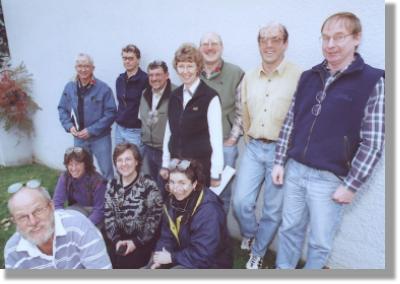
Nelson Region staff: All eyes for the Third World

Six-year-old wisdom
By Laura Bolster, Planning Forester, Smithers
I was having a discussion with my six-year-old daughter, Katelynn, about what products
are made from trees.
We talked about how terrible it would be if there were no Kleenex or sticks for
lollipops, or toilet paper.
She concluded as well that if paper is used to make cigarettes, then there must be too
many trees in the world. |



