Better Beetle planning brings big bucks
By Jeff Elder, Regional Communications, Prince George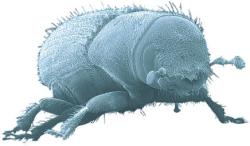
An idea submitted by four staff in the Prince George forest region has netted them
$2,000 each from the employee recognition program.
The winners are Stuart Taylor of the regional office and Lance Mitchell, Matt Wiess and
John Degagne of the Fort St. James district. John has since moved to the Vanderhoof
district.
The four won for a computer model they developed to plan harvesting and treatment of
beetle-infested areas. Fort St. James District is using it and other districts with large
beetle infestations likely will adopt it.
"Before you ever set foot on the ground you can use the model to tell you which
areas need attention first," Lance explained.
The model works by combining Geographic Information System information on known
infestations and stand susceptibility with environmental and operational factors such as
riparian areas and wildlife tree patches to produce a risk rating. The rating of each
epicentre (the tree or trees beetles originate from in a forest stand) allows staff to
accurately direct scarce resources to the high priority areas.
Considering there are over 18,000 epicentres in the Fort St. James district alone, more
accuracy will save time and dollars—millions of dollars.
"The new system also sets targets, so you can tell if you’re making progress
with your beetle control efforts," added Mitchell.
For more information contact Lance Mitchell or Matt Weiss at 250 996-5200.

Bugs Across the Border: Sharing Our Success with the U.S.
Submitted by: Val Miller and Juliet Craig, Nelson Forest
Region
Bugs are expanding throughout the Nelson Forest Region and staff are grinning from ear
to ear. The Forest Service excited about large, healthy insect populations? How can this
be?
If you’re involved in the management of invasive non-native plant species, insects
are the good guys, attacking and causing the decline of unwanted weeds. Known as
biological control, the process involves the introduction of natural predators of a weed
from its country of origin. Before biocontrol agents can be released, they are screened to
ensure that they will only attack the target weed and not related native species,
agricultural crops, or your favourite garden plants. The Forest Service participates in
several International Biocontrol Consortia, groups of Provincial, Federal, State, U.S.
Federal and University organisations who work together to pursue and establish new
biocontrol agents for various weed species across North America.
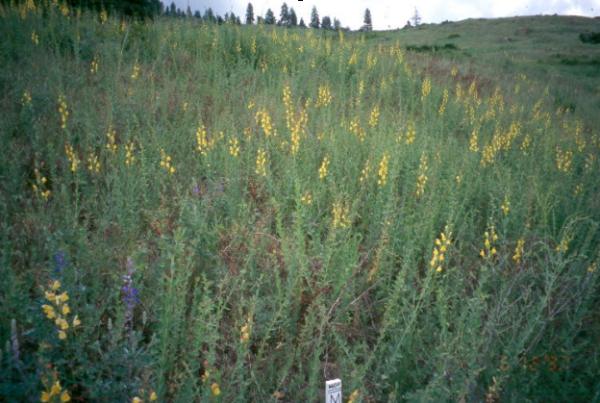
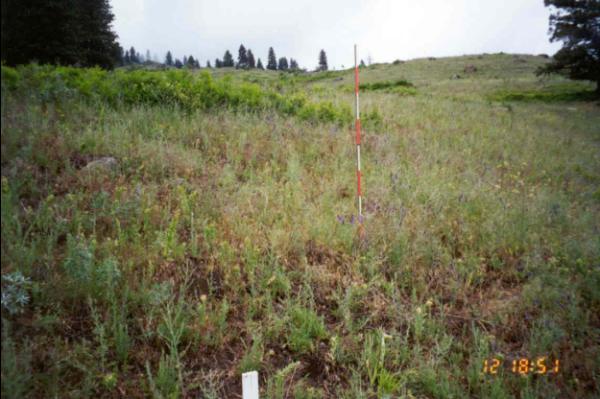
A recent success in the "War on Weeds" in the Nelson Forest Region has been
the significant decline of Dalmatian toadflax populations due to the introduction and
rapid spread of the biological control agent, Mecinus janthinus. Dalmatian
toadflax, with its yellow snapdragon-like flowers has invaded grasslands, roadsides and
other disturbed areas in British Columbia. Like other non-native invasive plant species,
this weed has impacted biodiversity, reduced forage for wildlife, and reduced grazing
opportunities for cattle ranchers.
Mecinus janthinus, a stem-boring weevil that kills toadflax through both adult
and larval feeding activity, was imported from Europe and first released in BC in 1991.
Since 1994, this weevil has been introduced to 115 sites in the Nelson Forest Region.
Sites that were once dense stands of tall healthy toadflax are now reduced to only a few
small stunted plants (see photos). These impacts and large Mecinus populations not
only have Forest Service staff excited but have drawn international attention. Officials
in the United States are watching progress with keen interest since they have only
recently begun releasing the Mecinus weevil.
The large healthy Mecinus populations in British Columbia have allowed Forest
Service to offer some surplus weevils to the United States for their use in biocontrol. On
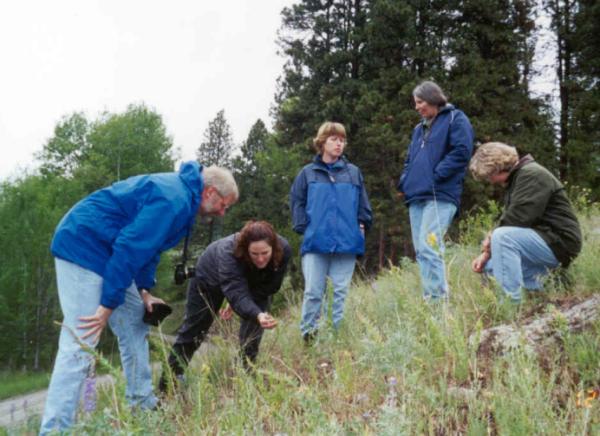
June 12th, staff from Nelson Forest Region joined representatives from United
States Department of Agriculture (USDA), Agriculture and Agri-Food Canada, and the
University of Lethbridge to collect insects and share success stories of biological
control of Dalmatian toadflax. During this field visit and through other collection
activities this year, the Nelson Region provided 16,000 Mecinus janthinus insects
to the USDA for release at various sites in Colorado, Montana, Wyoming, Idaho, and
Washington.

 www.for.gov.bc.ca/pab/news/features/beetles/index.htm
|